Compared with manual operations
Manual exports and spreadsheet routing break once volume grows. Integration-focused fulfillment reduces sync lag, duplicate orders, and status-update delays.
One-Click Multi-Store Management, Scale Without Chaos
This page supports searches around Shopify order sync, multi-channel fulfillment integration, inventory synchronization, and automated order routing for fast-scaling ecommerce operations.
This section is designed to capture comparison-style search intent and explain where each service fits better than a generic supplier, plugin, or warehouse-only option.
Manual exports and spreadsheet routing break once volume grows. Integration-focused fulfillment reduces sync lag, duplicate orders, and status-update delays.
Single-purpose plugins solve fragments of the workflow. A stronger integration layer connects product sync, inventory logic, fulfillment routing, and shipping feedback together.
This service makes more sense when a brand sells on Shopify plus marketplaces and needs one operational view instead of separate back-office routines.
This module is designed for high-intent commercial searches around best for, when to use, and who should choose a service before committing to a supplier or fulfillment partner.
A seller running Shopify plus marketplace channels replaces spreadsheets and disconnected apps once overselling, delayed sync, and order-routing mistakes begin eating profit.
These question clusters are written for commercial search intent, covering selection criteria, cost logic, timing, workflow, compliance, and scale concerns.
That is the goal. Stores should avoid spreadsheet workflows and use a system that syncs orders, shipping status, and inventory updates with as little manual handling as possible.
The safest setup uses one source of truth for inventory, consistent SKU rules, and fast sync intervals so Shopify, marketplaces, and warehouse stock do not drift apart.
The most common failures are duplicate orders, partial address ingestion, slow status pushback, and SKU mismatches. A stable integration process should be designed to catch those edge cases early.
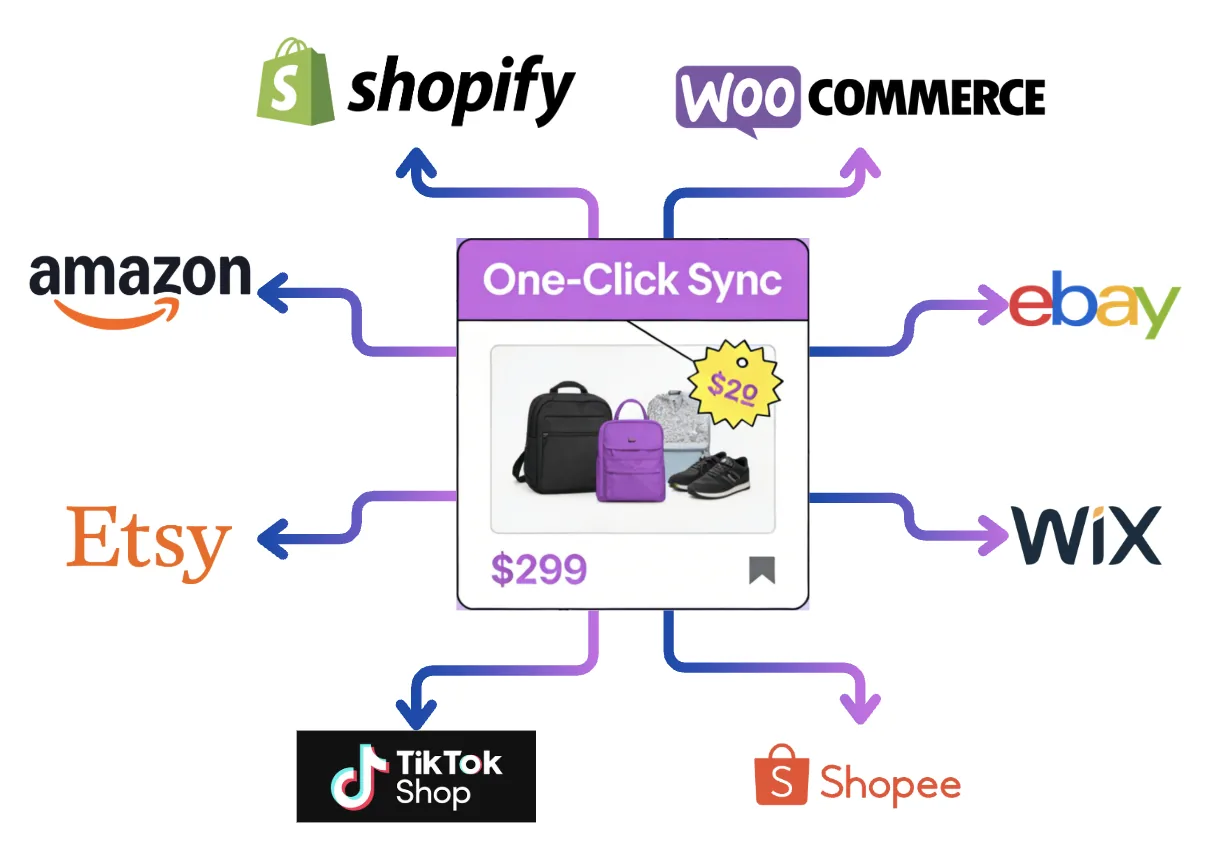
Sync products to all connected platforms with just one operation. No need to upload repeatedly, saving you time to focus on sales.
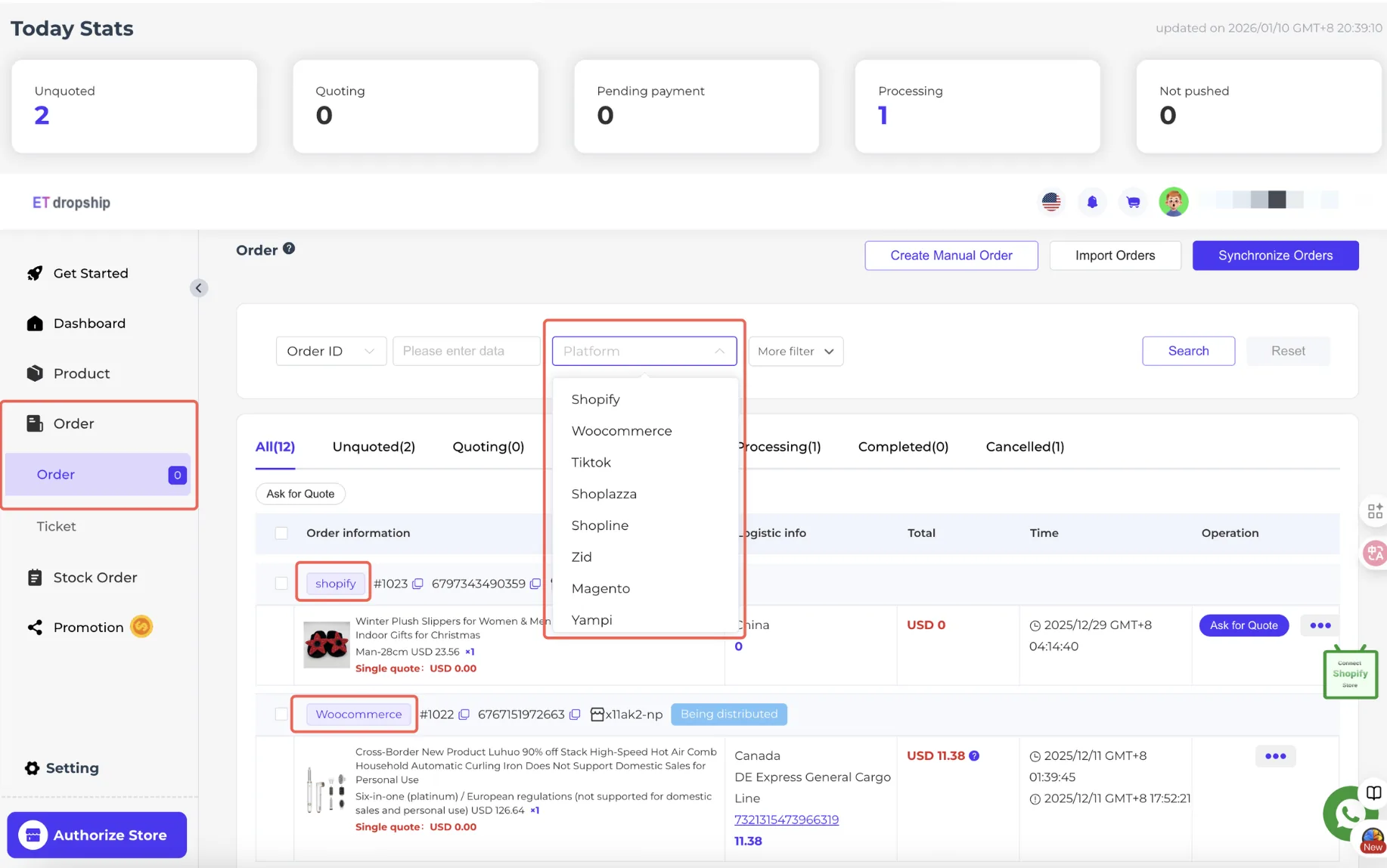
All platform orders are managed in one unified Dashboard. Automatically sync order status, process uniformly, and improve efficiency.
From customer order to product delivery, fully automated processing. You just focus on sales.
